Every restaurant menu generates hundreds of guest questions per day. Here’s how AI handles allergen queries, dietary requests, and recommendations instantly and what that means for your team.


Every restaurant menu is more complicated than it looks.
A 40-item menu is not just a list of dishes. It is a database of ingredients, preparation methods, allergen information, portion sizes, customisation options, dietary suitability, sourcing details, and pairing possibilities. And every item on that menu generates questions — from the straightforward (“Is this gluten-free?”) to the genuinely complex (“I’m following a low-FODMAP diet — which dishes can you modify for me?”).
Restaurants miss an average of 150 calls per month, with 60% tied to orders or reservations according to Hostie.ai’s restaurant phone data. And that’s just phone calls. In the dining room, the volume is higher, research consistently shows that guests ask an average of 3 to 5 questions per dining experience, meaning a restaurant serving 150 covers a day is fielding upwards of 500 menu-related queries every single shift.
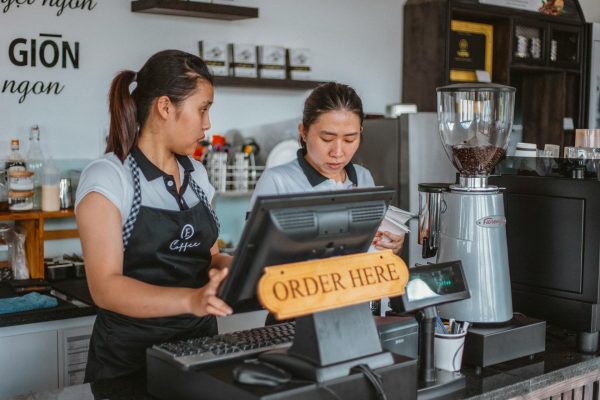
Most of those questions are handled by your servers. And most of those servers are handling them while simultaneously managing three other tables, remembering a modification request from table 9, and watching for the signal that table 12 is ready to order.
This is where AI changes the dynamic not by replacing servers, but by absorbing the question layer so that your team can focus on the service layer.
The Categories of Menu Questions AI Handles Best
Not all menu questions are equal. Some require human judgment and contextual awareness. Many do not. Here is where AI consistently outperforms even experienced staff.
Allergen and Dietary Restriction Questions
These are the highest-volume and highest-stakes menu queries in any restaurant. A server who hesitates on an allergen question is not just a service problem: it is a liability. A guest with a nut allergy who receives a confident but wrong answer faces a genuine health risk.
AI menu systems trained on your complete ingredient data answer allergen questions instantly and with consistent accuracy regardless of which staff member is on shift, how busy the floor is, or how recently the new hire started. The answer to “Does your carbonara contain dairy?” is not a matter of memory or confidence. It is a matter of data access. AI has that access at all times.
For restaurants with complex menus or high volumes of dietary-restriction guests, this single capability alone justifies the investment. The AI becomes the first line of allergen information, and your servers become the confirmation layer for guests who need extra reassurance.
Dietary Lifestyle Questions
Beyond clinical allergens, today’s guests increasingly follow specific dietary frameworks — keto, paleo, whole30, low-FODMAP, anti-inflammatory, plant-based. These require a deeper level of menu knowledge than most servers can reliably maintain, especially when it comes to hidden ingredients in sauces, marinades, and preparation methods.
A guest asking “What’s your lowest-carb entrée?” needs more than a quick scan of the menu. Keto compliance depends on whether a marinade contains sugar, whether a sauce is thickened with flour, whether a dressing has hidden honey. Most servers cannot answer this confidently without going to the kitchen. An AI system trained on your complete recipe data can answer it immediately and accurately.
For restaurants that actively cater to health-conscious demographics, this capability is a direct competitive advantage. Guests who feel genuinely understood and accommodated rather than met with vague answers and an apology are significantly more likely to return.
Ingredient Sourcing and Preparation Questions
“Is your salmon wild-caught?” “Do you use MSG?” “Is the beef grass-fed?” These questions reflect a growing consumer expectation around food transparency that shows no sign of slowing down.
Answering them accurately requires detailed supplier knowledge that is genuinely difficult for front-of-house staff to maintain, especially when menus change seasonally or sourcing shifts. AI systems store your supplier data alongside your menu data so when a guest asks about provenance, the answer is available immediately and accurately, without requiring a trip to the kitchen or a call to the manager.
Portion and Sharing Questions
“Will this be enough for two people?” “Can we share this between four?” “How big is the portion?” These questions significantly affect guest satisfaction and table spend. A guest who under-orders and leaves hungry is unlikely to rate the experience highly. A guest who over-orders feels wasteful.
AI can answer these questions with data-backed specificity — including sharing recommendations drawn from actual customer ordering patterns at your restaurant. “Our 16oz ribeye typically satisfies one very hungry guest or two with moderate appetites, especially with two sides.” This level of detail builds ordering confidence and directly reduces the disappointment that comes from mismatched expectations.
Recommendations and Pairings
“What would you recommend?” is a question every server loves when they have time for it — and dreads when they have three other tables waiting.
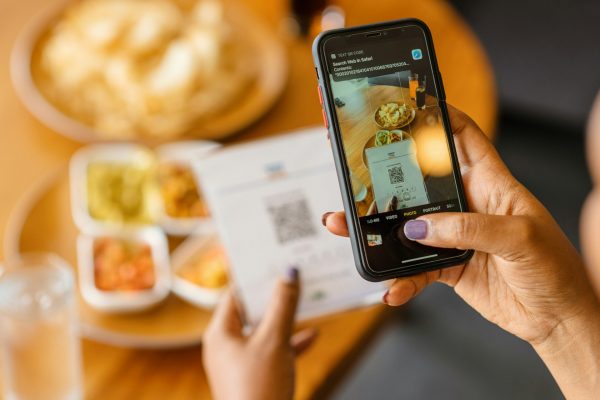
AI handles the first pass. A guest browsing the QR menu can ask for popular dishes, the chef’s picks, or the best wine pairing for their choice. The system surfaces answers based on your menu relationships and ordering patterns. By the time a server engages, the guest is already informed — which means the human interaction becomes a genuine moment of connection rather than a rushed transaction.
For a deeper look at how AI recommendation handling translates directly to check size, see How to Increase Restaurant Check Size Using AI During Service.
What This Means for Your Staff Day to Day
The impact of AI handling the question layer is not abstract. It is felt shift by shift.
43% of restaurant calls go unanswered, with the majority happening during the critical dinner rush when staff are at maximum capacity, according to Hostie AI’s 2025 industry research. The same dynamic plays out at the table: servers answering an ingredient question at table 4 are not taking an order at table 7, not noticing the guest at table 2 trying to flag them down, not delivering the warmth and attentiveness that the dining experience is actually built on.
AI handles the information retrieval. Your team handles the hospitality. For a practical breakdown of how this plays out across a full shift, see How AI Reduces Repetitive Tasks for Restaurant Servers.
The staff who work alongside AI tools consistently report a specific kind of relief: the reduction of what might be called the FAQ fatigue. It is the cumulative drain of answering the same questions correctly, dozens of times, across a busy shift. Removing that fatigue does not just make servers more efficient. It makes them genuinely better at the parts of the job that require a human.
How the Technology Actually Works
You do not need to understand the technical architecture to use these tools effectively, but a basic picture helps set realistic expectations.
AI menu systems work by ingesting your complete menu data including dishes, prices, ingredients, allergen information, preparation methods, sourcing details, modification options and building a knowledge base that can be queried in natural language. When a guest asks a question, the system matches the intent of the question to the relevant data and returns an accurate answer.
The key word is live. A well-built AI menu system pulls from your current menu data in real time. If you remove a dish at 6pm, the AI stops recommending it at 6:01pm. If you update a price, the AI reflects the new price immediately. This is fundamentally different from a static FAQ document or a chatbot trained on a snapshot of your menu six months ago.
Most modern platforms integrate directly with your POS system which means the AI is not operating on a separate island of information, but reading from the same data source that drives your kitchen and your till. For a plain-English explanation of how restaurant AI systems work at a broader level, see What Is a Restaurant AI Agent? A Beginner’s Guide
Implementation: What to Expect
Setting up an AI menu assistant is significantly simpler than most restaurant operators expect. The three core inputs most platforms need are your complete menu data including descriptions and prices, ingredient and allergen information, and preparation method and modification details.
Most platforms go live within 24 to 48 hours of receiving this data. Initial accuracy typically sits in the 90 to 93% range and improves as the system processes real guest interactions and receives feedback on edge cases.
The most successful implementations involve your most experienced servers in a brief calibration period which is typically one to two weeks.
Veteran staff often catch nuances that raw data misses: “The AI says we can add grilled chicken to any salad, but it doesn’t actually work well on the Asian sesame salad because the flavours clash.” These inputs refine the system quickly and build team confidence in the tool.
Measuring Whether It’s Working
The metrics that matter most for AI menu assistance are not just accuracy scores. The operational indicators to track are:
Question volume per server per shift: are your servers fielding fewer information requests, and spending more time on relationship-building interactions?
Order accuracy rate: are modifications and dietary requirements being captured correctly more often?
Average check value: are AI-driven recommendations contributing to higher per-cover spend?
Guest satisfaction scores: specifically around knowledge and service quality, which often improve together when staff are less stretched.
Most platforms including chocochip.ai provide dashboards covering these metrics. If yours does not, you can track them manually over a 30-day pilot period before committing to a longer-term implementation.
Try Chocochip Smart QR Menu
Transform your static PDF or paper menu into an interactive digital experience. Real-time updates, instant recommendations, and staff nudges, all set up faster than brewing a pot of coffee.
FAQ
Can AI really handle allergen questions accurately enough to trust?
Yes, provided the system is trained on complete, up-to-date ingredient data and that data is maintained as your menu changes. The accuracy of an AI allergen response is only as good as the data it is drawing from. This is why real-time menu sync matters: a system pulling from a live database is far more reliable than one trained on a static document that may be weeks or months out of date.
What happens when a guest asks something the AI cannot answer?
Well-built systems have a fallback protocol. If a query falls outside what the system can handle confidently, it flags the interaction for a human rather than guessing. The guest experience does not break — it escalates cleanly to a server, who has the context to help.
Does this work for both dine-in and phone/online orders?
Yes. The same AI knowledge base that powers a QR menu for dine-in guests can handle phone queries and online ordering interactions. The channel changes; the accuracy does not.
Will my staff feel replaced by this?
The consistent experience among restaurants using AI menu tools is the opposite. Staff respond positively once they experience a shift where they are not fielding the same allergen question for the eighth time. The tools remove a specific kind of fatigue that is rarely discussed but very real — and freeing staff from it consistently improves both job satisfaction and service quality.
How much does it cost? Most AI menu platforms start between $29 and $99 per month depending on features and call volume. For most restaurants, the investment is recovered within the first two to four weeks through a combination of reduced order errors, increased check averages from consistent upselling, and staff time redirected from information retrieval to genuine hospitality.