Delivery apps like Uber Eats and DoorDash make online ordering easy, but their commissions can take a large share of every order. Fortunately, small restaurants can accept online orders in more affordable ways using digital menus and QR ordering systems. This guide explains how restaurants can reduce ordering costs while still offering customers a convenient …

Online ordering is no longer optional for restaurants. Customers expect to browse menus on their phones and place orders quickly, whether they are dining in, picking up food, or ordering delivery.
But for many small restaurants, the biggest concern is cost.
Delivery platforms like Uber Eats and DoorDash make online ordering easy to set up, but the commission fees can be significant. Restaurants often pay 20–30% of every order, which can quickly eat into already thin profit margins.
The good news is that there are more affordable ways for small restaurants to accept online orders. By understanding how online ordering systems work and choosing the right approach, restaurants can reduce costs while still offering a convenient experience for customers.
Why Online Ordering Can Become Expensive
Many restaurant owners first encounter online ordering through delivery marketplaces. These platforms combine several services in one place:
Online ordering system
Payment processing
Delivery drivers
Customer marketplace
While this bundled approach is convenient, it also explains why the fees are high. Delivery marketplaces handle marketing, logistics, and payment processing, and the commission reflects those services.
For small restaurants that already have a loyal customer base, paying high commissions for every order may not be necessary.
Instead, restaurants can separate the ordering system from the delivery service, which often reduces costs dramatically.
Common Pricing Models for Restaurant Ordering Systems
Restaurant ordering platforms typically use one of three pricing models. Understanding these models helps restaurant owners choose the most cost-effective option.
Commission-Based Platforms
Commission platforms take a percentage of every order placed through the system. Delivery apps usually operate this way.
For restaurants, this means that the cost of online ordering increases as order volume grows. While this model requires little upfront investment, it can become expensive over time.
Subscription-Based Systems
Some restaurant ordering systems charge a fixed monthly or annual subscription fee instead of taking a percentage of each order.
This model is often more predictable because the restaurant knows exactly how much the system will cost each month. For restaurants with regular online orders, subscription systems are usually cheaper than commission-based platforms.
Convenience Fee or Transaction-Based Models
Another approach is a small fee charged per order. Instead of taking a large percentage of revenue, the system charges a small flat amount each time an order is placed.
For restaurants that want to avoid large commissions, this model can be significantly more affordable.
Marketplace Commissions vs Direct Ordering
One of the most effective ways to reduce online ordering costs is to encourage direct ordering instead of relying entirely on delivery marketplaces.
With direct ordering, customers place orders directly through the restaurant’s digital menu or website rather than through a marketplace app.
This approach has several advantages:
Lower fees
Greater control over pricing
Direct relationship with customers
More flexibility in how orders are fulfilled
Restaurants can still offer delivery if needed, but they are no longer dependent on marketplaces for every order.
How QR Code Ordering Reduces Costs
QR code ordering has become one of the simplest and most affordable ways for restaurants to accept online orders.
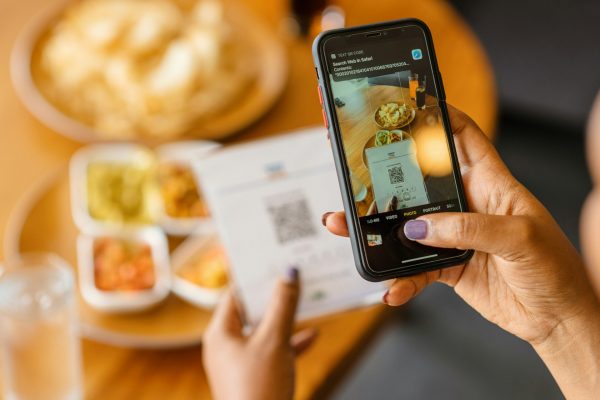
Instead of printing new menus or building complex mobile apps, restaurants can generate a QR code that links directly to their digital menu.
Customers scan the QR code with their phone, browse the menu, and place an order.
QR codes can be placed in several locations, such as:
Dining tables
Takeout packaging
Restaurant windows
Flyers and marketing materials
This allows restaurants to offer a convenient ordering experience without expensive infrastructure.
Because the ordering system is separate from delivery logistics, restaurants can choose whether orders are picked up or delivered.
Pickup Orders Are Often the Most Profitable
For many small restaurants, pickup orders are the most cost-effective form of online ordering.
When customers place an order online and pick it up themselves, the restaurant avoids delivery costs entirely. This means the restaurant keeps a larger portion of the revenue from each order.
Many restaurants encourage pickup by offering faster preparation times or small discounts compared to delivery orders.
Pickup orders also simplify operations because restaurants do not need to manage drivers or delivery logistics.
Offering Delivery Without Marketplace Fees
Restaurants that want to offer delivery still have several options without relying exclusively on delivery marketplaces.
Some restaurants operate their own delivery service using staff drivers. Others partner with courier networks that provide drivers without listing the restaurant on a marketplace.
Services such as Uber Direct allow restaurants to request delivery drivers while still accepting orders through their own systems.
This approach allows restaurants to maintain control over pricing and customer relationships while still offering delivery.
Choosing the Right Ordering System
When evaluating an online ordering system, small restaurant owners should consider several factors beyond just the price.
Ease of Setup
The system should be simple enough to set up without requiring technical expertise.
Mobile-Friendly Menus
Most customers will view the menu on their phones, so the ordering interface should be optimized for mobile browsing.
Menu Flexibility
Restaurants should be able to update prices, add items, or mark dishes as unavailable quickly.
Order Notifications
The restaurant should receive orders instantly so that staff can begin preparing them right away.
Ready to serve smarter menus?
Get in touch
How Chocochip Helps Restaurants Accept Orders Directly
Chocochip provides a digital menu and QR ordering system that allows restaurants to accept online orders directly from customers.
Instead of routing orders through a delivery marketplace, Chocochip sends orders straight to the restaurant. This allows restaurant owners to decide how those orders will be fulfilled.
With Chocochip, restaurants can:
Create a mobile-friendly digital menu
Generate QR codes for tables and takeout packaging
Accept orders directly from customers
Update menu items instantly
Reduce dependence on delivery marketplace commissions
Because the system focuses on the ordering layer, restaurants can combine it with pickup, in-house delivery, or courier services depending on what works best for their operations.
The Bottom Line
Online ordering does not have to be expensive for small restaurants.
While delivery marketplaces offer convenience, their commission fees can significantly reduce profits. By using direct ordering systems and encouraging pickup or flexible delivery options, restaurants can provide the convenience customers expect while keeping more revenue from each order.
For many small restaurants, the cheapest way to accept online orders is not through large marketplaces but through a system that allows customers to order directly.
Comparing Popular Online Ordering Systems for Small Restaurants
When choosing an online ordering system, many small restaurant owners compare several platforms before deciding which one fits their operations and budget.
Some of the most commonly considered tools include GloriaFood, Square Online, Toast POS, and Chocochip. Each platform is designed for slightly different restaurant needs.
Understanding the differences can help restaurant owners choose the most cost-effective option.
GloriaFood vs Chocochip
GloriaFood is known for offering a free online ordering system that restaurants can embed on their website. It focuses primarily on helping restaurants accept pickup and delivery orders online.
However, many restaurants eventually upgrade to paid features for marketing tools, branded apps, or advanced integrations.
Chocochip focuses on a different experience: helping restaurants turn their digital menu into a smart ordering interface. Instead of just displaying items, the system helps customers understand the menu, ask questions, and place orders directly.
For small restaurants with complex menus, this can improve the ordering experience and reduce customer confusion.
Square Online vs Chocochip
Square Online is popular among small businesses because it combines online ordering with payment processing. Restaurants that already use Square for payments often find it convenient to add online ordering through the same system.
However, Square is designed as a general commerce platform, which means the ordering experience may not be optimized specifically for restaurant menus.
Chocochip focuses exclusively on restaurant menus and ordering. This allows restaurants to create a more menu-focused experience for customers browsing and ordering from their phones.
Toast POS vs Chocochip
Toast POS is a comprehensive restaurant management system that includes POS hardware, payments, and online ordering. It is often used by larger restaurants that want an all-in-one system.
While Toast provides powerful features, the cost and complexity may be higher than what small independent restaurants need when they simply want to start accepting online orders.
Chocochip is designed to be lighter and easier to implement, allowing restaurants to launch digital menus and QR ordering without requiring a full POS system change.
Which System Is Best for Small Restaurants?
The best online ordering system depends on how a restaurant wants to operate.
Restaurants that want a full POS ecosystem may prefer Toast.
Restaurants already using Square payments may find Square Online convenient.
Restaurants looking for a simple digital ordering layer that works with their existing operations may prefer a lightweight solution.
For many small restaurants, the most important factor is not just the software itself but how easily customers can browse the menu and place orders.
Choosing a System That Works for Your Restaurant
The goal of any ordering system should be to make it easier for customers to order while keeping costs manageable for the restaurant.
Many small restaurants are now exploring solutions that allow them to accept orders directly through digital menus and QR ordering rather than relying entirely on delivery marketplaces.
This approach allows restaurants to maintain control over their menu, their customers, and their margins.
FAQ: Affordable Online Ordering for Restaurants
What is the cheapest way for restaurants to accept online orders?
The most affordable option is usually a direct ordering system that allows customers to place orders through the restaurant’s own digital menu instead of a marketplace.
Do restaurants need delivery apps to accept online orders?
No. Restaurants can accept online orders through their own ordering system and then decide separately how those orders are fulfilled.
Can QR code menus accept online orders?
Yes. Some QR code menu systems like chocochip.ai allow customers to both view the menu and place orders directly from their phones.
Are delivery marketplaces worth it for small restaurants?
Delivery marketplaces can help restaurants reach new customers, but the commission fees can reduce profitability. Many restaurants use them alongside direct ordering systems rather than relying on them exclusively.